
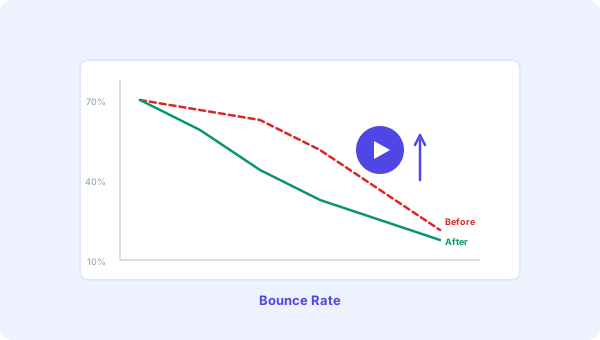
Most visitors leave in seconds
You spend money driving traffic to your website. People show up. And then they leave. No click, no scroll, no sign-up. Just gone.
That is what a high bounce rate looks like. Google Analytics says the average bounce rate for most websites sits between 40% and 60%. For landing pages, it can go above 70%.
The question is: why do people leave so fast, and what can you do about it?
Why people bounce
There are dozens of possible reasons, but most of them come down to one thing: the visitor did not find a reason to stay.
Your headline did not grab them. Your page looked like every other page they have seen today. Nothing stood out. Nothing said "hey, this is worth your time."
Think about your own browsing habits. How many websites did you close in the last hour without reading a single paragraph? Probably a few. We all do it.
The problem is not that your product is bad. The problem is that text on a screen is easy to ignore.
Why video changes the equation
Video is hard to ignore. When a small widget pops up in the corner of a page and a real person starts talking, your brain pays attention. That is just how humans work. We are wired to respond to faces and voices.
The numbers back this up. Wistia found that people spend on average 2.6x more time on pages with video than without. And according to EyeView Digital, adding video to a landing page can increase conversions by up to 86%.
More time on page means lower bounce rate. More engagement means more conversions. It is a simple chain.
The problem with traditional video
You might be thinking "I already have a YouTube video on my about page." That is a start, but embedded YouTube videos have problems.
They are passive. The visitor has to scroll to find them, hit play, and then watch. Most people never do that. They require effort from the visitor, and bouncing visitors do not want to make effort.
They also send people to YouTube. Once someone clicks the YouTube logo, they are gone. Now they are watching cat videos instead of buying your product.
How video bots work differently
A video bot is proactive. It appears automatically when someone visits your page. A small bubble in the corner shows a preview. The visitor clicks, and a real person greets them with a short message.
The key differences:
It comes to the visitor. No scrolling, no searching. The video finds them.
It is short. 15 to 30 seconds. Not a webinar. Not a product tour. Just a quick, friendly greeting.
It has buttons. After watching, the visitor sees clear options. "See pricing." "Book a demo." "Chat with us." They do not have to figure out what to do next.
It targets by page. A visitor on your homepage sees a welcome video. A visitor on your pricing page sees a pricing explainer. Different message for different intent. We covered this in detail in our guide to personalized video and page targeting.
What a lower bounce rate actually looks like
Say your homepage gets 1,000 visitors per month and your bounce rate is 65%. That means 650 people leave without doing anything. Only 350 stick around.
Now add a video bot. Even a modest improvement - dropping the bounce rate to 50% - means 500 people stay instead of 350. That is 150 extra engaged visitors every month from the same traffic. No extra ad spend.
And those visitors are more engaged because they watched a video and clicked a button. They are warmer leads than someone who just skimmed a headline.
How to set it up
You do not need a production team. Here is the short version:
1. Record a 20-second video on your phone. Say hi, explain what you do, give one clear call to action. 2. Upload it to a video bot platform. 3. Add one or two buttons (your most important CTA). 4. Paste the embed code on your site.
We wrote a step-by-step guide on how to add a video widget to your website in 5 minutes if you want the detailed version.
The whole process takes less time than writing a new headline to A/B test. And the impact on bounce rate is usually bigger.
Start with your highest-traffic page
Do not try to add video to every page at once. Pick the page with the most traffic and the highest bounce rate. That is where you will see the biggest difference.
For most businesses, that is the homepage. Fix that one first. Measure the results for a week. Then expand to your second most important page.
Small changes, real results. Your visitors are already coming. Give them a reason to stay.
Try it free. No credit card needed.