
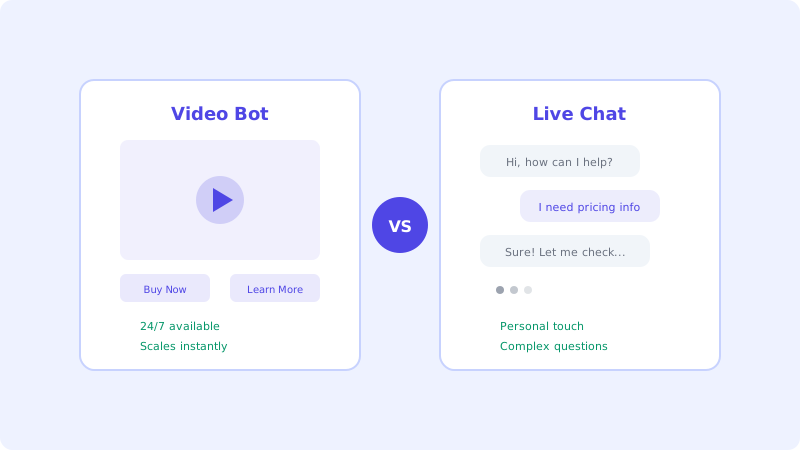
Two tools, different jobs
Both video bots and live chat aim to engage website visitors. But they do it in very different ways. Choosing between them is not really an either/or decision, but understanding the strengths of each helps you use them where they work best.
What video bots do well
Video bots are proactive. They start the conversation. A visitor lands on your page and within seconds, they see a friendly face explaining your product, welcoming them, or pointing them in the right direction.
They are great for:
- First impressions. Nothing beats a human face and voice for making a connection quickly.
- Scaling. A video bot works 24/7, handles unlimited visitors at once, and never needs a coffee break. You record it once and it works forever.
- Consistent messaging. Every visitor gets the same quality pitch, the same energy, the same call to action. No off days.
- Guiding visitor behavior. CTA buttons during the video can push visitors toward your most important pages: pricing, sign-up, contact form. (See how button targeting works.)
What live chat does well
Live chat is reactive. It waits for the visitor to reach out. But when they do, it provides something video cannot: a real conversation.
Live chat shines when:
- Visitors have specific questions. "Does this work with Shopify?" "Can I get a discount for annual billing?" These need a human answer.
- The sale needs a personal touch. High-ticket products and B2B sales often need a back-and-forth conversation before someone commits.
- Support gets complex. When the FAQ video is not enough, a chat with a real person can save a frustrated customer from leaving.
Where video bots fall short
Video bots cannot have a conversation. They deliver a message and offer options, but they cannot answer a question that was not anticipated. If a visitor has a very specific concern, the video bot cannot help.
They also require some upfront work. You need to record videos, set up buttons, and think about which pages get which content. It is not a lot of work, but it is more than just turning on a chat widget.
Where live chat falls short
Live chat needs people. Someone has to be online to respond, and they need to respond fast. Studies show that the average expected response time for live chat is under 60 seconds. If you cannot meet that, the chat does more harm than good. Nothing is worse than a "We will get back to you" message on a live chat.
It also does not scale well. One support agent can handle maybe 3-4 chats at the same time. During peak hours, visitors end up waiting in a queue.
The best approach: use both
This is not a cop-out answer. It is genuinely the best strategy. Here is how it works in practice:
- Video bot handles the first interaction. It welcomes the visitor, explains the product, and presents options.
- One of those options is "Chat with us". The visitor clicks it and gets connected to live chat.
- By the time they reach your chat agent, they already understand the product (from the video). The agent does not need to explain basics. They can focus on closing the sale or solving the specific issue.
This combo works because video handles the top of the funnel (awareness, interest) and chat handles the bottom (decision, action). Each tool plays to its strengths. We dug into the conversion side of this in How Video Bots Increase Website Conversions by 40%.
How to set it up
Platforms like Apikoo let you do exactly this. You create a video bot with CTA buttons, and one of those buttons can open a live chat. The visitor watches the video, clicks "Chat with us", and a chat window opens right there. No page reload, no redirect. It is all one smooth experience.
Start with a video bot on your homepage and most important product or service page. Add a chat button. See how visitors respond. You will probably find that the combination gives you better results than either tool alone. Check our pricing - chat is included starting on the Starter plan.